Product List
-
General-purpose polystyrene equipment
-
Reaction stirring equipment
-
Heat exchange equipment
-
Fermentation, filtration and extraction equipment
-
Drying, dispersion and mixing equipment
-
Distillation concentration equipment
-
Others
-
Evaporation concentration equipment
-
Steaming and hydrolyzing equipment
-
Crushing equipment
-
Pressing and extracting equipment
-
Cooling equipment
-
Conveying equipment
-
Pressure vessel
-
Melt crystallization technology and equipment
Products
Spiral plate heat exchanger
|
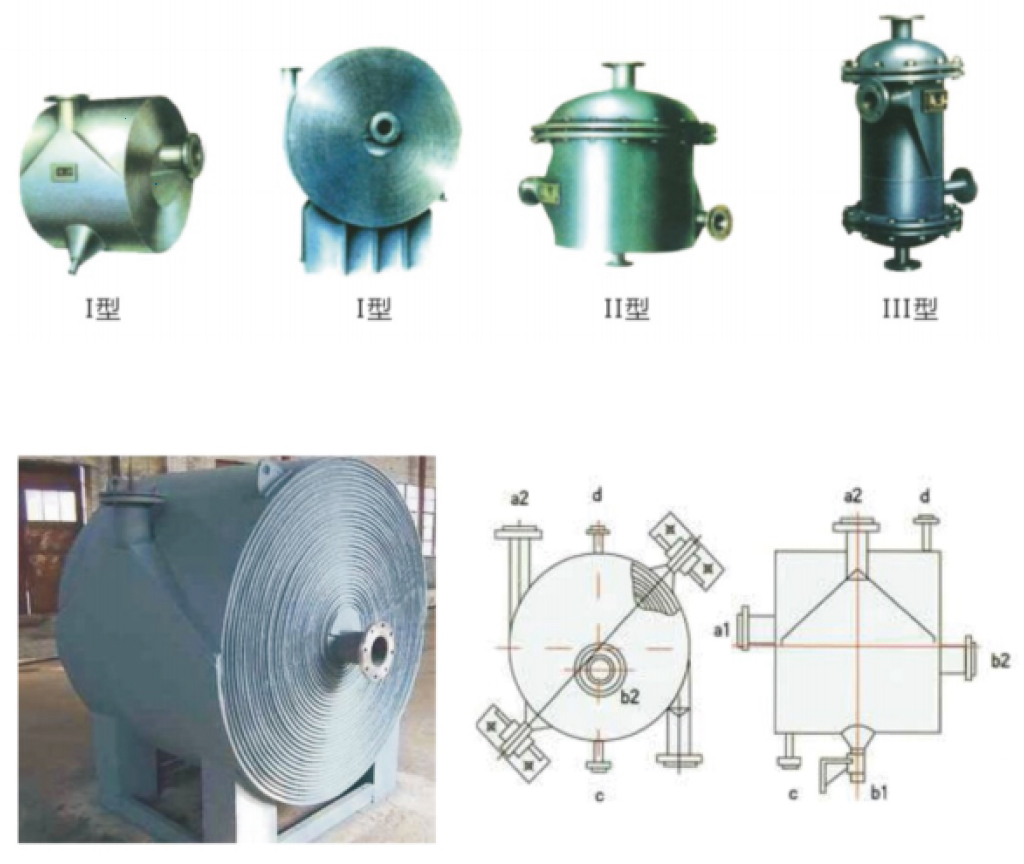
Spiral plate heat exchanger is a high-efficiency heat transfer equipment, applicable for gas-gas, gas-liquid and liquid-liquid heat transfer. It is widely used in chemical, petroleum, solvent, pharmaceutical, food, light industry, textile, metallurgy, steel rolling, coking and other industries. According to structural form, it can be divided into non-detachable type (Type I) and detachable type (Type II, Type III) spiral plate heat exchangers. Structure and Performance1. This equipment is fabricated by rolling two metal plates to form two uniform spiral channels. The two heat transfer media can flow in full counter-current mode, which greatly improves the heat transfer effect. Ideal heat transfer performance can be achieved even for media with small temperature difference. 2. The nozzles on the shell adopt tangential structure with low local resistance. The curvature of the spiral channel is uniform, and the fluid flows inside the equipment without sharp turning, resulting in low overall resistance. Therefore, the design flow velocity can be increased to obtain higher heat transfer capacity. 3. For Type I non-detachable spiral plate heat exchanger, the end faces of spiral channels are sealed by welding, so it has high sealing performance. 4. The structural principle of Type II detachable spiral plate heat exchanger is basically the same as that of non-detachable type, but one channel can be disassembled for cleaning. It is especially suitable for heat exchange of viscous and sediment-containing liquids. 5. The structural principle of Type III detachable spiral plate heat exchanger is basically the same as that of non-detachable type, while both channels can be disassembled for cleaning, with a wider scope of application. 6. Spiral plate heat exchangers are classified by nominal pressure into PN0.6, 1.0, 1.6, 2.5MPa (referring to the maximum working pressure that a single channel can withstand). By material, they are divided into carbon steel and stainless steel. Users can select according to actual process conditions. 7. When a single unit cannot meet the operating requirements, multiple units can be used in combination, but the combination shall comply with the following provisions: Parallel combination and series combination: equipment and channel spacing shall be identical. Mixed combination: one channel in parallel and the other channel in series. Partial specifications of heat exchangers are listed as follows: |
||||||||||||||||||||||||||||||||||||||||||||||||||||||||||||||||||||||||||||||||||||||||||||||||||||||||||||||||||||||||||||||||||||||||||||||||||||||||||||||||||||||||||||||||||||||||||||||||||||||||||||||||||||||||||||||||||||||||||||||||||||||||||||||||||||||||||||||||||||||||||||||
| Stainless Steel PN0.6, 1.6MPa Non-detachable (Type I) Spiral Plate Heat Exchanger | ||||||||||||||||||||||||||||||||||||||||||||||||||||||||||||||||||||||||||||||||||||||||||||||||||||||||||||||||||||||||||||||||||||||||||||||||||||||||||||||||||||||||||||||||||||||||||||||||||||||||||||||||||||||||||||||||||||||||||||||||||||||||||||||||||||||||||||||||||||||||||||||
|
||||||||||||||||||||||||||||||||||||||||||||||||||||||||||||||||||||||||||||||||||||||||||||||||||||||||||||||||||||||||||||||||||||||||||||||||||||||||||||||||||||||||||||||||||||||||||||||||||||||||||||||||||||||||||||||||||||||||||||||||||||||||||||||||||||||||||||||||||||||||||||||





 Scan QR Code to Follow Us
